Grand Rapids, Michigan
Ceiling Repair Grand Rapids MI
Ceiling damage shows up fast — cracks along truss lines, brown water stains after a leak, sagging drywall near a bathroom, or texture that no longer matches. We repair Grand Rapids ceilings and blend the finish with what is already there.
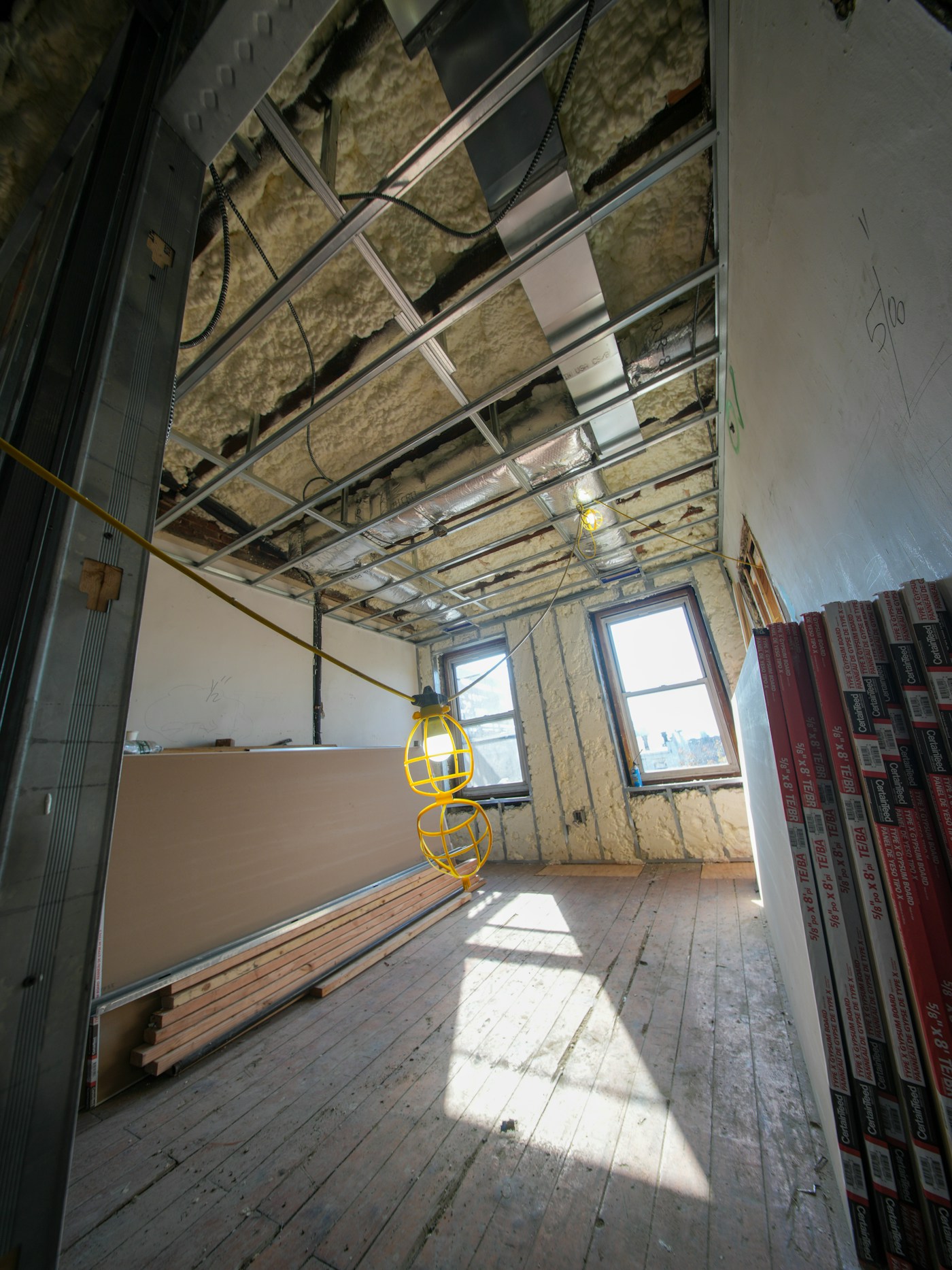
Ceiling cracks and nail pops
Grand Rapids homes built with truss roofs often develop ceiling cracks where drywall meets walls or along joist lines — especially after seasonal movement. Nail pops and screw pops push through paint and need reset fasteners, mud, and retexture.
We scrape loose material, secure the ceiling board, tape seams where needed, and match orange peel, knockdown, or smooth ceiling texture common in West Michigan homes.

Sagging drywall and water stains
Sagging ceiling sections usually mean moisture weakened the drywall or tape — common after upstairs bathroom leaks, ice dam roof leaks, or HVAC condensate issues. We remove compromised material, verify the source is resolved, and install new ceiling drywall with a blended texture.
Water stains require stain-blocking primer before texture and paint. We explain what caused the stain and whether replacement is safer than cosmetic cover-up.
Ceiling Repair Grand Rapids MI — FAQ
- Do you repair ceiling drywall damage in Grand Rapids?
- Yes. We repair ceiling drywall damage throughout Grand Rapids and surrounding areas. Ceiling repair may be needed because of roof leaks, upstairs bathroom leaks, plumbing issues, HVAC condensation, sagging drywall, settlement cracks, nail pops, previous patch work, or damaged ceiling texture. Ceiling drywall repair often requires careful patching, taping, mudding, sanding, and texture matching so the repair blends with the surrounding ceiling. We can repair smooth ceilings, textured ceilings, popcorn ceilings, orange peel texture, and knockdown texture.
- Do you repair nail pops and screw pops?
- Yes. We repair nail pops and screw pops in drywall ceilings and walls. Nail pops happen when fasteners push through the drywall surface, often because of framing movement, seasonal changes, or installation issues. Repairing nail pops usually involves resetting or adding fasteners, removing loose compound, patching the affected area, sanding smooth, and matching the surrounding finish. This is a common drywall repair in Grand Rapids homes, especially in ceilings, newer construction, basements, and areas with seasonal expansion and contraction.
- Do you remove or repair popcorn ceilings?
- Yes. We provide popcorn ceiling repair and may assist with popcorn ceiling removal or texture updates depending on the project. Popcorn ceiling repairs are often needed after water damage, ceiling cracks, patch work, fixture changes, or damaged texture. Matching popcorn ceiling texture can be difficult because older texture changes color and shape over time, but we work to blend the repair as closely as possible. If the goal is a modern smooth ceiling, skim coating or full texture removal may be recommended after the existing material is evaluated.
- Do you repair water-damaged drywall?
- Yes. We provide water damage drywall repair in Grand Rapids and West Michigan. Water-damaged drywall may come from roof leaks, pipe leaks, bathroom leaks, basement moisture, appliance leaks, ice dams, or storm damage. Before repairing the drywall, the source of the water should be corrected so the damage does not return. Depending on the condition of the drywall, the repair may include removing damaged material, replacing drywall, taping, mudding, sanding, texture matching, and preparing the area for primer and paint. If mold or active moisture is present, additional remediation or drying may be required before drywall repair is completed.
- Can you match existing drywall texture?
- Yes. Texture matching is one of the most important parts of a professional drywall repair. We repair and blend common wall and ceiling textures including orange peel, knockdown, popcorn texture, smooth finish, skim coat, and light hand-applied textures. A good drywall patch should not stand out after painting. Texture matching depends on the existing surface, age of the drywall, previous paint layers, lighting, and the size of the repair. Our goal is to make the repaired area blend as closely as possible with the surrounding wall or ceiling.